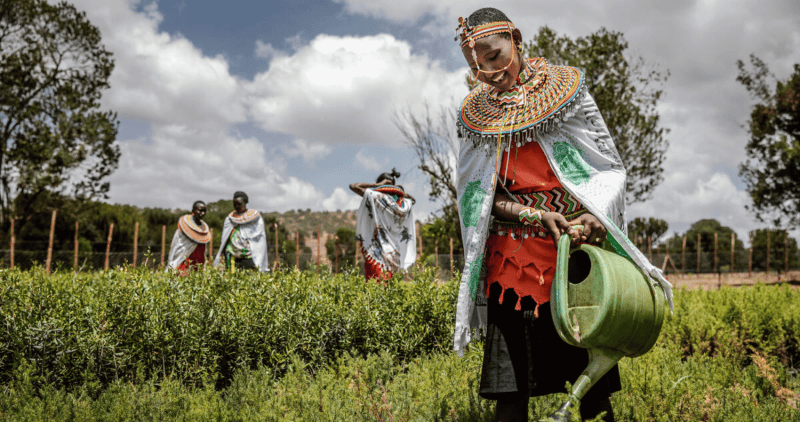
While the UN declared 2025 as the International Year of Cooperatives, 2026 is the International Year of the Woman Farmer (IYWF) - a move that was welcomed by cooperatives around the world. IYWF 2026 aims to spotlight the essential (but often unrecognised) roles women play across agrifood systems, while promoting actions to close the gender gaps and improve women’s livelihoods worldwide.
The IYWF was launched by the Food and Agriculture Organization of the United Nations (FAO), which is coordinating activities throughout the year with the International Fund for Agricultural Development (IFAD) and the World Food Programme (WFP). Globally, women make up nearly 50% of the agricultural workforce, but face productivity gaps of up to 24% due to limited access to land, credit, and technology. According to the FAO, closing gender gaps could boost the global GDP by US$1tn – and reduce food insecurity for 45 million people.
The cooperative model is a tool used by women farmers to build a better world for them and their communities. In Rwanda, for example, Women-led coffee co-operatives have become powerful vehicles for economic empowerment and community development, while in Mali, the Benkadi women’s co-operative of shallot producers illustrates how collective action can overcome market barriers. Women’s argan oil co-operatives in Morocco’s Sous Valley have transformed a traditional activity into a globally recognised value chain, and in Paraguay, the Manduvira sugarcane co-operative stands out for its high rate of female participation and ownership.
The ICA and FAO have long-collaborated, both through their partnership as members of COPAC, and MoU commitments at global and regional levels. The MoU signed in 2018 on the eve of the UN Decade of Family Farming (2019-2028), called for the need to focus on agricultural cooperatives and farmers' networks in efforts to enhance food security and nutrition.
In 2024, the Regional Office of the FAO for Latin America and the Caribbean also signed an agreement with the ICA to promote joint efforts supporting regional cooperatives, including mobilizing resources to strengthen the model in the region, promoting the adoption of the Model Law on Agri-food Cooperatives by the Latin American and Caribbean Parliament (Parlatino), expanding knowledge on cooperatives in the region, encouraging cooperation among cooperatives, and promoting innovative associative models.
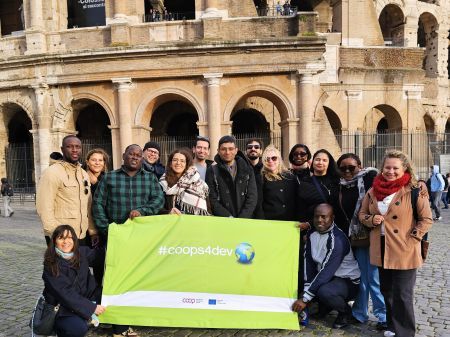
This partnership is ongoing, and in March, ICA colleagues gathering in Rome for the #coops4dev🌍 Annual Review Meeting also met with FAO colleagues at their headquarters to exchange on shared priorities and upcoming initiatives, exploring potential collaboration around the IYWF 2026 – including around legislation, cultural heritage and support for the NENA and CIS regions.
There is much crossover between cooperatives and women farmers – and while collaborations are long-term, this year in particular is a valuable opportunity to strengthen synergies and continue building partnerships that support cooperatives and women farmers globally.